
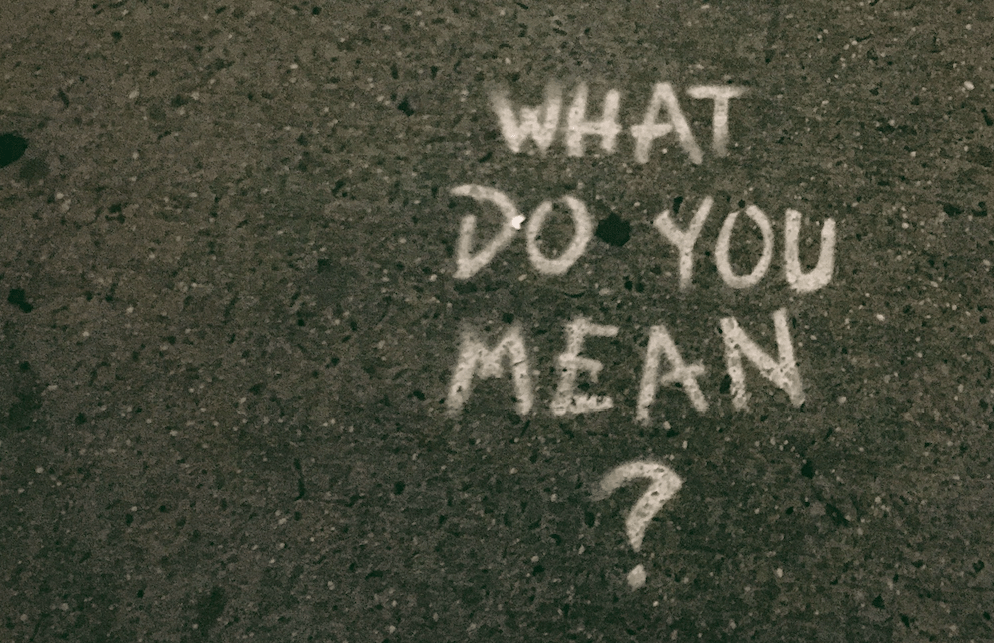
There are times when artists want you to interpret their work in your own way. Add your own meaning. Apply it to your own life. It’s intentionally vague. They don’t explain their thought process or purpose for the piece, assuming they even had one in the first place.
When you explain a joke – it’s not funny any more (unless you’re Norm MacDonald). As E.B. White put it…
“Humor can be dissected, as a frog can, but the thing dies in the process and the innards are discouraging to any but the purely scientific mind.“
E.B. White, “A Subtreasury of American Humor”
Here’s how Norm might have explained that:
In this case, the frog is like the joke, you see? Like maybe a really clever joke that only smart people get. And then when you take it apart and analyze the thing for a dumb person, it dies. The frog not the dumb person. Not yet anyway. So, it’s like killing the joke, which makes it not funny. Get it? Unless you’re a scientist, I guess. Maybe they have weird senses of humor or something. I don’t know.
There are also times in my life when having something explained to me greatly improved my experience with it. Here are a couple of examples…
Ben Folds is one of my favorite musicians. But when I first started listening to him, I thought his song “Brick” was just a lame, sappy, break-up song that got played on the radio sometimes. Then I heard him explain the backstory.
The song is really about when he and an old girlfriend chose to have an abortion as teenagers without telling their parents. (The backstory is much more widely known know – but it was new to me in the early 2000s when he explained it on Ben Folds Live.) The song wasn’t meant to be a political statement for either side – just an honest portrayal of his pain going through it at the time.
That changed everything about it for me and I’m sure for many others. You listen to it in a new way after hearing the explanation. Yet, people still interpret “Brick” in different ways.
I took a film studies class in 2002 under the tutelage of Craig Detweiler. He was showing us films that reflected different eras in U.S. history. One of them was Spike Lee’s Do the Right Thing.
At the end of the movie, a character named Radio Raheem is choked to death during a confrontation with police. That led to the main character tossing a garbage can through the window of a pizzeria, which ignited an angry mob that trashed and burned the place in protest. (Note that the film was made in 1989, and we watched it long before George Floyd and Black Lives Matter.)
As a white kid from Wisconsin, I didn’t get it. How was that doing the right thing? I felt the heaviness of the film’s ending. But I couldn’t fully relate or understand why violence could be an appropriate reaction. I needed Do the Right Thing explained to me. I guess a lot of white folks did.
When you create something and put it out into the world, you have a choice…
Do you want people to have their own interpretation of it? If so, that’s more than fine. Spike Lee wanted Do the Right Thing to spark hard conversations about race relations in America. I’m sure he expected audiences to feel conflicted and ask questions about what his film meant.
In the end, even if art is explained to you in detail, you will still filter that meaning through your own experiences, beliefs, and opinions. People on different sides of the abortion debate see the song “Brick” in their own ways, for example.
But if what you made has a point, a purpose, a deeper meaning, then it may be worth explaining what you had in mind. That’s okay too. Because we want to get it.
Photo by Jon Tyson on Unsplash
Categories: Creative Mission Daily
 The Creative Mission