
The myth of the tortured artist is pervasive and needs to end. You don’t have to be miserable, traumatized, or addicted if you want create something meaningful and memorable.
Society glamorizes struggles. Overcoming obstacles makes for a great story. It mirrors parts of the hero’s journey that lead to the catharsis we all crave. You may feel the triumph of victory or the tragedy of defeat, but you feel something.
Your painful experiences can most definitely serve as inspiration for creative acts. However, it’s rare to find someone who is able to create effectively when they’re smack-dab in the middle of going through a rough time in life.
Some artists fall into a depression in between works. But when they’re in the midst of creating, they feel great. Your favorite band’s best years aren’t when the lead singer is strung out on heroin. That’s when everything falls apart.
In his book, Flow: The Psychology of Optimal Experiences, Mihaly Csikszentmihalyi explains how the happiest and most-fulfilling times in our lives come when we are in a focused state, working on something interesting and challenging:
“The best moments usually occur when a person’s body or mind is stretched to its limits in a voluntary effort to accomplish something difficult and worthwhile.”
Mihaly Csikszentmihalyi, Pscyologist & Author
Being productive makes you feel a whole lot better about life. Pain, however, doesn’t pair well with productivity. Your performance at work would be negatively affected if you were in physical pain, and an athlete wouldn’t play their best with an injury. So, it makes sense that mental and emotional pain wouldn’t be a good thing for creative productivity either.
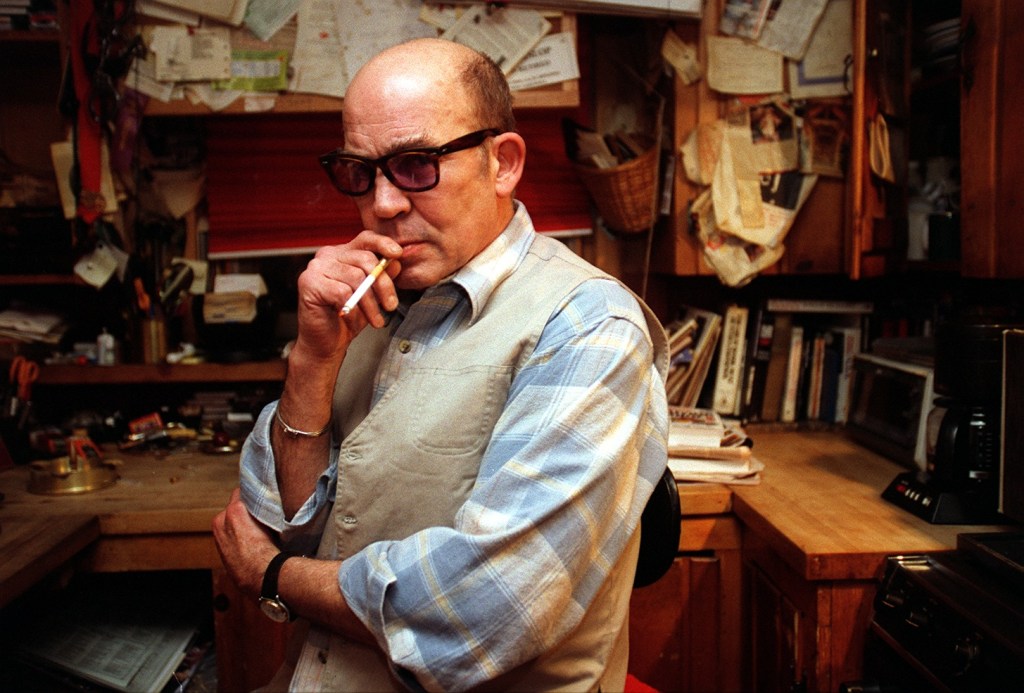
Hunter S. Thompson, the mind behind gonzo journalism, was famous for his use of drugs and alcohol. He often made his addictions and experimentations part of his work, as we see in Fear and Loathing in Las Vegas. It was part of the persona he created and part of what made him so interesting. But those vices were not always an advantage when it came to his writing.
Thompson played an important role criticizing key politicians in the late 1960s and 1970s, chief among them – President Richard Nixon. Towards the end of Nixon’s time in office, Rolling Stone had partnered Thompson with famous photographer, Annie Leibovitz.
When it came time to cover Nixon’s famous final flight after resigning, Hunter was too incapacitated to attend the historic event. Annie’s photos would run without his article.
“I had been one of the last journalists to be given credentials to get into the White House, and I was there waiting. Hunter was back at the hotel. Every reporter on the planet was at the White House, and Hunter was in the swimming pool at the Hilton with a battery-powered TV set.”
Annie Leibovitz, Photographer
Something similar happened when Thompson was in Africa for the Rumble in the Jungle boxing match between Muhammad Ali and George Foreman. He missed the fight and floated in the hotel pool where, according to fellow writer George Plimpton, he’d dumped a bunch of marijuana.
You might laugh at those stories and think, “That’s just how Hunter S. Thompson was.” But the truth is that we’ll never know what kinds of acerbic insights and hilarious truths we missed out on because of the demons he let control and eventually ruin him.
Whether you deal with depression and anxiety, addictive behaviors, or have trauma in your past – we need you to get better. Maybe being creative will help you. It could certainly help others.
It’s fine to mine your pain for ideas and inspiration. But whatever your art is – it can be born from love, joy, and peace just as well. Don’t think a lack of struggles in your life gives you an excuse not to create. And if you’re facing struggles – don’t let them stop you.
Image Credit: Photographer: Helen Davis Title: Staff Credit: The Denver Post City.
Categories: Creative Mission Daily
 The Creative Mission
